Place Value Duel
Place Value & Rounding
Round whole numbers to the nearest multiple of 3, 5, 10, 100 or 1,000 in short changing questions.
Rounding Mountain asks you to find the closest target value for a whole number. Each round picks a whole number and asks for the nearest multiple of 3, 5, 10, 100 or 1,000. Read the target shown in the prompt, type the rounded value and select Check. After a correct answer, select Next question to continue. Rounding is an estimate with a rule, not a guess at a number that merely looks tidy.
For a nearest-3 question, find the multiples of three immediately below and above the number, then compare the distances. If the number is 14, its neighbours are 12 and 15. Fourteen is one away from 15 and two away from 12, so 15 is nearer. For a nearest-5 question about 17, compare 15 and 20: 17 is two away from 15 and three away from 20. The answer is 15. These are examples of the method, not claims about particular rounds.
The targets appear in different rounds. Read the prompt before answering. An answer that is the nearest ten may be wrong when the game asks for the nearest multiple of five, even if both are familiar rounding exercises. Multiples of three and five are evenly spaced, so locating the neighbouring multiples gives you a check that works without a place-value digit rule. When a round asks for tens, hundreds or thousands, the digit method below becomes quicker.
When a round says “round to the nearest ten,” find the tens digit. The ones digit immediately to its right decides whether to keep the tens digit or raise it. From 0 to 4, keep it; from 5 to 9, increase it by one. Then replace the ones digit with zero. For 43, the ones digit is 3, so the nearest ten is 40. For 47, the ones digit is 7, so the nearest ten is 50. Always read the requested target first, because the same original number can have different correct rounded answers for different targets.
For the nearest hundred, inspect the tens digit. `364` rounds to 400 because its tens digit is 6, while `342` rounds to 300 because its tens digit is 4. For the nearest thousand, inspect the hundreds digit. `6,499` rounds to 6,000; `6,500` rounds to 7,000. The digit just right of the target place decides; digits farther right do not make their own separate votes. This “one deciding digit” rule is efficient when the game presents a number with several places.
The midpoint matters. A number ending in exactly five at the relevant place rounds up under the usual school rule used in whole-number exercises. For 25 to the nearest ten, the midpoint between 20 and 30 is 25, so the answer is 30. For 250 to the nearest hundred, the midpoint between 200 and 300 is 250, so the answer is 300. In this game, the nearest multiple is checked using that same halfway-up rule for positive whole numbers.
Place the original value between the two nearest benchmarks. For 372 to the nearest hundred, the benchmarks are 300 and 400. The halfway point is 350; 372 lies above it, so choose 400. For 324, the halfway point is still 350, and 324 lies below it, so choose 300. A number line explains why the digit rule works: the tens digit tells you which side of the halfway point the number occupies.
If the input accepts a typed number, include the zeros that belong to the rounded place. Rounding 4,682 to the nearest hundred gives 4,700, not 47 or 4,7. The thousands digit remains 4, the hundreds digit rises from 6 to 7, and tens and ones become zero. At a carry boundary, the result can gain a digit: 9,950 to the nearest hundred becomes 10,000. This is mathematically correct even though the answer looks unlike the original at first glance.
Read the prompt aloud: “nearest hundred.” Underline or mentally mark the hundreds digit in the displayed number. Look one digit to the right. Decide keep or increase. Replace all digits to the right with zeros. Finally, check that your answer is a multiple of the target place: a nearest-hundred answer should end in two zeros. Enter it, then submit and inspect the game's feedback before the next question.
Consider `8,746` rounded to the nearest ten, hundred and thousand. The three answers are 8,750, 8,700 and 9,000. The starting number has not changed, only the requested precision. A learner who memorises “round up when the last digit is six” would give the wrong hundred and thousand answers. For each target, identify the deciding digit relative to the place requested. This example illustrates the method; it is not a claim about a specific Rounding Mountain round.
Rounding is useful when an exact answer is not needed. A crowd of 1,987 people can be described as about 2,000; a 48-minute journey can be called about 50 minutes. But a game question has an exact requested place, so write the precise rounded value rather than an approximate phrase. If the game asks for the nearest thousand, “about two thousand” in words may not fit a numeric input even when the idea is right.
Check the target place before changing your arithmetic. Did you round to ten when the question said hundred? Did you inspect the target digit instead of the digit immediately to its right? Did you forget to zero lower places? Did a carry from 9 require the next digit to rise? These errors have different fixes. A teacher or parent can ask the player to name the two benchmarks and the halfway point, which often exposes the mistake without giving away the answer.
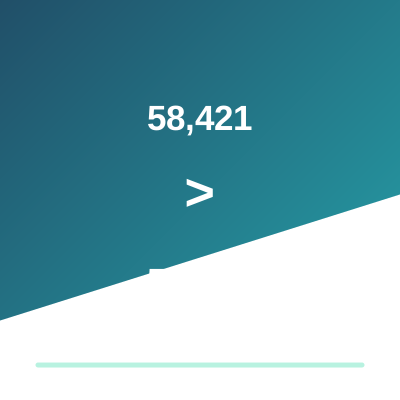
In Place Value & Rounding, Place Value Duel practises comparing exact five-digit values. Rounding Mountain asks which benchmark an exact value is nearest to. The Number Puzzles collection offers another way to look closely at number structure. These links reflect a progression from reading places to making a justified estimate.
Does every digit to the right affect rounding? The digit immediately to the right of the requested place decides. All lower digits then become zero.
Can a rounded answer be larger than the original? Yes. Rounding 47 to the nearest ten gives 50.
Can an answer gain a digit? Yes. Near a boundary, rounding 9,950 to the nearest hundred gives 10,000.
Is the answer always a multiple of ten? For nearest ten, yes. Nearest hundred ends in two zeros, and nearest thousand ends in three.
Rounding Mountain becomes easier when you locate the requested target before entering a number. For three or five, compare the neighbouring multiples. For ten, a hundred or a thousand, mark the deciding digit, choose the nearer benchmark and check the zeroes. Each correctly rounded answer is a small proof that you understood the size of the number.
Read the whole number and the target multiple in the prompt. Type the nearest multiple, select Check, read the feedback, then use Next question to continue.
Controls: Type the rounded number, select Check, then Next question after a correct answer. Keyboard and mobile touch both work.