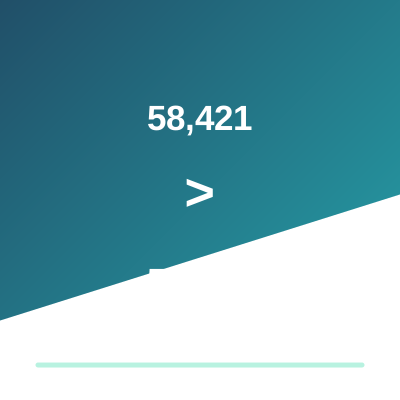
Place Value Duel
Place Value & Rounding
Place value and rounding games ask you to look at what each digit means before changing or comparing a number.
No games found. Try another search.
Place value and rounding games ask you to look at what each digit means before changing or comparing a number. A search for place value games online may lead to several different tasks; the first useful question is which digit and number range the player needs to understand.
Place Value Duel asks you to compare five-digit numbers by position. Rounding Mountain asks for the nearest multiple of 3, 5, 10, 100 or 1,000. The two games practise related but different skills: the first compares place values; the second estimates a nearby value.
In 352, the digit 3 means three hundreds, the 5 means five tens and the 2 means two ones. Move the 3 to the tens place in 532 and its value becomes thirty. The symbol is unchanged, but its position changes what it represents. A place-value chart or blocks grouped into hundreds, tens and ones can make this visible. A game should let the player connect a written numeral to a quantity, not merely tap whichever block has the same colour.
Place value games for beginners often start with two-digit numbers. Twenty-seven is two tens and seven ones. It can also be made from one ten and seventeen ones, though the usual written form groups ten of those ones into another ten. Re-grouping is important when adding or subtracting across a ten. If a player knows what the tens and ones stand for, 27 + 5 can be seen as 27 + 3 + 2, reaching 32. The Addition and Subtraction categories show how this structure supports calculations.
To partition 468, write 400 + 60 + 8. To build the number back, combine those parts. A place value game might show a chart with the hundreds or tens missing and ask the player to supply the correct digit. Another might show base-ten blocks and ask for the numeral. A finished game should explain its actual representation and let a player check why an answer fits.
When comparing 506 and 560, start at the largest place: both have five hundreds. Next compare tens: zero tens is less than six tens, so 506 is smaller. Ordering several numbers uses the same method, one pair at a time. Place value games KS1 searches may focus on tens and ones; place value games KS2 searches may include thousands and decimals. The label is broad, so the game card must name its real range.
The first place to the right of the decimal point is tenths, then hundredths, then thousandths. In 2.35, the 3 means three tenths and the 5 means five hundredths. That is why 2.5 equals 2.50: five tenths and fifty hundredths are the same amount. A decimal place-value task can use a hundred-square or number line to show the value. The Decimals category provides the closer path for that part of the subject, while this category links it to the whole-number places on the left.
Multiplying by ten shifts each digit's place value. In 24 × 10 = 240, the 2 moves from tens to hundreds and the 4 from ones to tens. Saying “add a zero” can be a quick observation for whole numbers, but it does not explain every decimal case. A place-value chart shows the consistent rule: each digit becomes worth ten times as much. Dividing by ten reverses that change. A game can test this understanding with a movable chart rather than a memorised phrase.
To round 347 to the nearest ten, look at the ones digit, 7. It is at least five, so round the tens up and reach 350. To round 342 to the nearest ten, the ones digit is 2, so the answer is 340. The original number is not replaced permanently; the rounded number is a nearby estimate at a chosen level of precision. A rounding game should make that chosen place clear before asking for an answer.
Rounding games may ask for the nearest hundred instead. For 347, compare 300 and 400: 347 is closer to 300. For 367, it is closer to 400. A number line can show the midpoint at 350. The rule about a next digit of five or more follows from this midpoint idea. It is easier to remember when you can picture the two nearby multiples and decide which is closer. With decimals, the same principle applies to tenths or hundredths, but the place must be named.
If a shopping total is 198 + 301, rounding to 200 + 300 suggests an answer near 500. The exact sum is 499. This estimate will not give the precise amount, but it can expose an answer of 4,990 as unreasonable. Choosing a sensible rounding place matters: rounding both prices to the nearest hundred is useful for a quick check, while an exact payment needs the original numbers.
Online place value games and rounding games may be combined or separate. Someone searching for interactive place value games may want to drag digits or blocks; someone searching for rounding may want number-line decisions. Place Value Duel compares digit positions; Rounding Mountain asks for the nearest multiple. Their cards describe those different actions separately.
Make 53 using five bundles of ten sticks and three single sticks. Exchange one bundle for ten singles and show that the total remains 53. Next write 53 as 50 + 3. Compare it with 35 and explain why the order of the digits changes the value. Finally place 53 between 50 and 60 on a number line and round it to the nearest ten. These steps connect quantity, numeral, comparison and estimation without requiring a finished browser game.
For larger numbers, use a place-value chart and say each digit's value aloud. If a mistake appears, ask whether the digit was placed in the wrong column or whether the amount was counted incorrectly. This diagnosis is more useful than only saying the answer is wrong. The same idea can guide feedback when an interactive game is developed.
It is a task where the player uses a digit's position to identify, build, compare or change a number. A 4 can mean four ones, four tens or four hundred depending on where it sits. Visual blocks, charts and number lines can help explain the difference. Place Value Duel gives a direct comparison of five-digit numbers.
Name the place you are rounding to, find the two nearest multiples at that place and decide which is closer. For 67 to the nearest ten, those multiples are 60 and 70; 67 is closer to 70. A number line shows the midpoint and why the answer changes after it. Always keep the original number when an exact calculation is required.
Decimals extend the same place-value system to tenths, hundredths and smaller parts. Whole-number and decimal games may focus on different sides of the point, but they use the same idea that position determines value. A player who understands tens and ones can use that reasoning when approaching tenths and hundredths. Check a game's actual number range before choosing it.
Choose Place Value Duel to compare five-digit numbers, or Rounding Mountain to practise the nearest multiple shown in each question.